Texas Flag SVG: A Designer’s Real-World Embroidery Review
First Impressions: Clean, Bold, and Instantly Recognizable
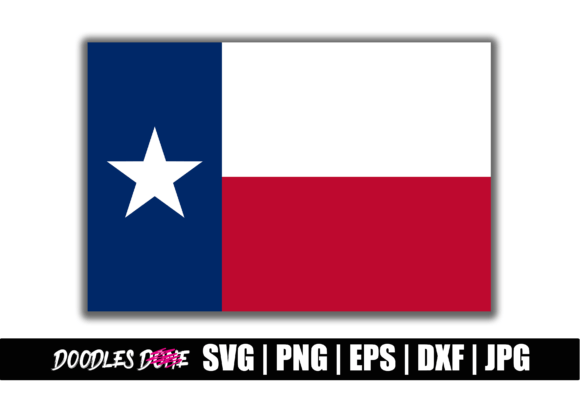
Opening the Texas Flag SVG bundle feels like unboxing a well-edited design asset—no fluff, no surprises. You get five formats (SVG, PNG, EPS, DXF, JPG), all cleanly labeled and organized. As a designer who’s stitched hundreds of state flags for custom apparel and boutique merchandise, my first glance at this file tells me everything I need: strong silhouette, balanced proportions, and zero visual clutter. The lone star sits confidently centered in the blue field, the red and white stripes are evenly spaced, and the overall layout respects negative space—critical when translating to machine embroidery.
What This Design *Wants* to Be Stitched On
I recently used the Texas Flag SVG to embroider a set of cotton canvas tote bags for a local Austin boutique. It worked beautifully—not because it’s “perfect,” but because its simplicity translates with clarity. The bold geometry holds up at 3.5” wide, reads instantly from across a craft fair booth, and stitches cleanly on medium-weight fabric with standard tear-away stabilizer. That same file became a subtle chest emblem on organic cotton baby onesies (scaled down to 2”), and later a crisp patch on denim aprons for a food truck vendor. Its versatility isn’t accidental—it’s baked into the clean vector structure.
Where It Shines in Real Projects
- Custom apparel: Works reliably on sweatshirts and crewnecks—especially when placed on left-chest or sleeve positions where proportion matters more than fine detail.
- Embroidered patches: The clean lines and minimal internal breaks make it ideal for heat-seal or sew-on patches without excessive trimming.
- Baby embroidery: No tiny text or fragile elements—just confident shapes that hold up after repeated washing and gentle ironing.
- Holiday and wedding gifts: Used on tea towels and pillow covers for a Texas-themed bridal shower—guests recognized it immediately, and the stitching stayed crisp through gift wrapping and transport.
- Etsy listings & small shop products: Paired with neutral backgrounds in printable mockups, the Texas Flag SVG delivers professional consistency across product photos—no pixelation, no distortion, no guesswork.
Where to Pause—and Test First
This isn’t a one-size-fits-all embroidery file. Its strength is in clarity, not intricacy—so don’t force it where subtlety is expected. I learned this the hard way when trying to stitch it at 1.2” on a curved cap front: the star lost definition, and the stripe edges blurred slightly due to fabric stretch and hoop tension. Similarly, on thin jersey or highly textured terry cloth, the fill stitch density (as interpreted by your embroidery software) can cause puckering if not adjusted. Always test the Texas Flag SVG on scrap fabric first—especially if you’re using it for:
- Small hoop sizes (under 4”)
- Stretchy or delicate fabrics (like ribbed knits or silk-blend baby blankets)
- Dark fabric (check thread color contrast—white or light gray thread pops, but metallics or pastels may mute recognition)
- Laminated or coated surfaces (like insulated lunch totes—stabilizer choice becomes critical)
How It Shapes Perception—Before and After Stitching
A well-executed Texas Flag SVG doesn’t just look good—it builds trust. Customers browsing your Etsy shop or boutique shelf recognize authenticity in clean execution. When the star aligns perfectly, the stripes run parallel without wavering, and the blue field fills evenly, it signals craftsmanship—not just digital convenience. That impression lifts perceived value: a $28 embroidered tote feels premium; a $14 personalized baby onesie feels heirloom-worthy. And for creative entrepreneurs, that consistency matters across branding—whether you're using the Texas Flag SVG as a standalone motif or integrating it into a larger design system for your craft business.
Practical Notes Every Embroidery Designer Should Keep Handy
Before committing to production—or listing a finished product—run these checks:
- Test on scrap fabric using your exact thread colors, stabilizer type, and machine settings.
- Review stitch density in your embroidery software—overly dense fills on large flag areas can cause stiffness or thread breakage on lightweight items.
- Confirm hoop size compatibility—the Texas Flag SVG scales well, but your machine’s maximum hoop dimensions still apply.
- Inspect corners and points—especially the star tips. Some auto-digitized versions soften angles; this one holds them cleanly, but verify in your preview mode.
- Try black-and-white mockups to assess contrast and legibility before finalizing product photos.
- Compare light vs. dark fabric backgrounds—a white thread on navy works; silver thread on charcoal may vanish.
- Use proper stabilizer—cutaway for stretchy knits, tear-away for stable wovens, and fusible for layered applique projects.
- Check licensing terms before selling finished items or bundling the Texas Flag SVG into your own digital embroidery file packs—this is a digital download, not a commercial-use license by default.
Final Thought: A Reliable Workhorse, Not a Gimmick
The Texas Flag SVG isn’t flashy. It won’t win awards for innovation—but it earns respect for reliability. In my studio, it’s become a go-to for time-sensitive client requests, pop-up market prep, and seasonal craft business launches. It fits naturally into the Crafts category because it supports making—not just displaying. And as a Graphics asset, it bridges digital precision with tactile result: what you see in the vector file is what you’ll get in satin stitch, fill stitch, or even running-stitch outline versions. For embroidery designers, Etsy sellers, and handmade product creators who value clarity over complication, this is less of a “design” and more of a trusted tool—one that quietly elevates every finished product it touches.