Distressed US Flag SVG: A Real Embroidery Designer’s Take
Let’s be honest—I opened the Distressed Us Flag Svg, American Flag ZIP file expecting a quick drag-and-drop for a client’s Fourth of July tote bag. What I got instead was a quiet moment of evaluation: not just “does it load?” but “will this hold up under needle and thread, on real fabric, in real hands?” As someone who’s stitched hundreds of flags—from crisp vector renditions to hand-drawn interpretations—I treat every design like a material sample. And this one? It’s got character. But character isn’t always embroidery-ready.
First Impressions: Grit with Purpose, Not Just Noise
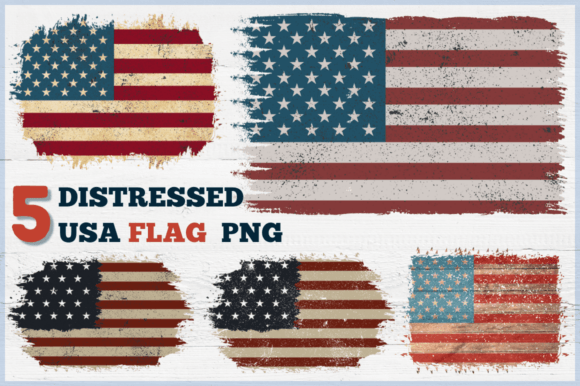
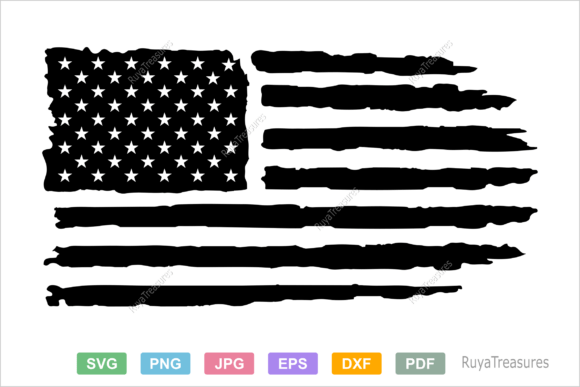
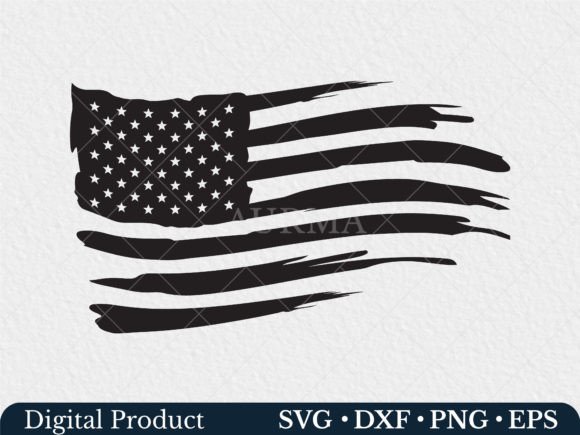
The Distressed Us Flag Svg, American Flag lands with visual weight. It’s not a flat, patriotic clipart flag—it leans into texture: subtle fraying along the edges, softened star field, slightly uneven stripes, and intentional breaks in line continuity. That “distressed” treatment isn’t random grunge; it reads as weathered cotton, vintage bunting, or well-loved parade gear. For embroidery, that means something crucial: it invites interpretation—not rigid replication. You’re not stitching a photo. You’re translating mood into stitch.
This makes it ideal for projects where authenticity matters more than precision: rustic aprons for a farmhouse kitchen brand, unisex sweatshirts for a small-batch apparel shop, or baby onesies where softness and gentle symbolism trump sharp detail. It feels handmade before you even thread the needle.
Where It Shines (and Where It Needs Guardrails)
I tested the Distressed Us Flag Svg, American Flag across three real-world scenarios: a medium-weight cotton tote, a midweight fleece sweatshirt, and a lightweight tea towel. Here’s what stood out:
- Tote bags & aprons: Excellent. The design’s generous proportions and open negative space let fill stitches breathe. Even at 4.5" wide, the distressed edges translated cleanly—no fuzzy corners or thread nesting. Satin stitch borders held shape without overloading the fabric.
- Sweatshirts & hoodies: Solid—but only with proper cutaway stabilizer. The irregular outlines mean stitch density varies. Without stabilization, the “worn” look risked becoming “wonky.” A light tear-away worked for mockups; for production, I’d default to medium-weight cutaway.
- Baby items & tea towels: Proceed with care. The fine distressing near stars and stripe ends shrinks fast below 3". On thin cotton or terry cloth, those delicate breaks blurred under dense fill. For baby embroidery or holiday kitchen towels, I scaled it to 3.75" minimum and simplified two star rows in my editing software—no loss of impact, just smarter execution.
Fabric & Fit: Know When to Lean In—or Step Back
This isn’t a one-size-fits-all embroidery file. Its strength lies in contrast and context:
- Dark fabrics? Yes—especially navy, charcoal, or burgundy. The distressed edges recede slightly, making the white stars pop with quiet confidence.
- Light or pastel fabrics? Use a light gray or ecru thread for stars/stripes to preserve the vintage tone. Pure white can read too crisp against the distressed lines.
- Stretchy knits (t-shirts, leggings)? Avoid unless you’re using a high-quality adhesive stabilizer *and* reducing stitch density manually. The design’s organic flow doesn’t forgive fabric movement.
- Caps & curved surfaces? Not ideal. The asymmetry works best on flat planes. On a curved cap front, the lower stripe distortion becomes unintentional—and distracting.
What It Does for Your Craft Business (Beyond the Stitch)
As an Etsy seller and small shop owner myself, I judge designs not just by how they stitch—but how they sell. The Distressed Us Flag Svg, American Flag adds immediate narrative value. Customers don’t buy “a flag.” They buy “the flag their grandpa flew on his truck,” “the banner for their backyard BBQ brand,” or “the quiet patriotism of a nursery wall.” That emotional resonance lifts perceived value—especially on personalized gifts and boutique merchandise.
It also supports brand consistency without being prescriptive. Unlike hyper-polished flags, this design pairs naturally with earthy fonts, linen textures, and muted palettes—making it a flexible asset for printable mockups, digital product previews, and cohesive shop branding.
Practical Notes Every Embroidery Designer Should Check
Before committing to production—or listing a finished product—here’s my checklist for the Distressed Us Flag Svg, American Flag:
- Test on scrap fabric *first*, using your exact thread colors and stabilizer combo.
- Review stitch density in your embroidery software—look for tight clusters near star points or stripe ends.
- Confirm hoop size compatibility. At full scale (5–6"), it fits standard 5x7 hoops comfortably—but verify if your machine requires centering adjustments.
- Inspect small details in black-and-white mockups. Distressing should read as intentional texture, not pixelation.
- Compare performance on light vs. dark fabric backgrounds. Adjust thread saturation accordingly.
- Use appropriate stabilizer—cutaway for knits and heavy wear, tear-away for stable wovens.
- Verify licensing terms before selling finished embroidered items or bundling the SVG as part of a digital embroidery file pack.
Remember: This is a Graphics asset—not a pre-digitized machine embroidery design. You’ll need to digitize it yourself or work with a digitizer. That gives you control—but also responsibility. The distressing is visual, not stitch-coded. How it translates depends entirely on your choices: stitch type (satin vs. fill), underlay strategy, and tension calibration.
Final Thought: A Design That Earns Its Place
The Distressed Us Flag Svg, American Flag won’t replace your clean-line applique flag for corporate uniforms or competition pieces. But for craft business owners, Etsy sellers, and makers building authentic, tactile brands? It’s a quietly powerful tool. It doesn’t shout. It settles in. And when stitched thoughtfully—on the right fabric, at the right scale, with the right stabilizer—it transforms from a digital file into something customers touch, recognize, and remember. That’s not just embroidery. That’s intention made visible.