US Don’t Tread on Me Flag SVG
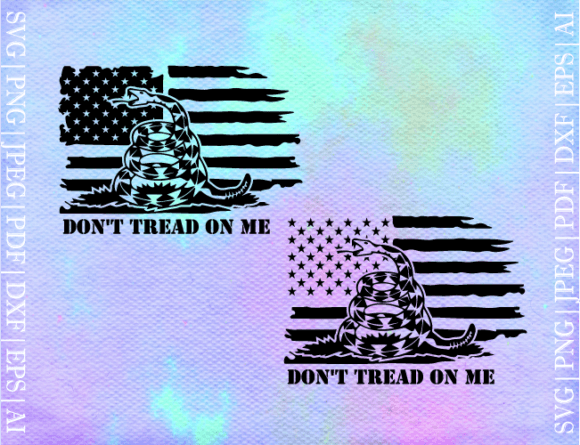
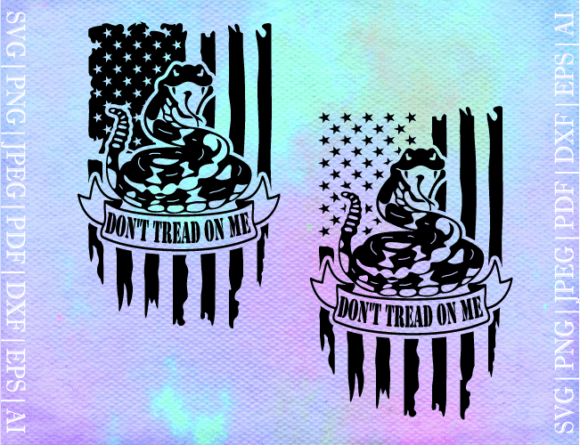
As a designer who’s stitched hundreds of flag-themed embroidery files—from vintage Americana to modern minimalist interpretations—I opened US Don’t Tread on Me Flag SVG expecting boldness, but what stood out immediately was its clean, no-nonsense silhouette. No excessive flourishes, no crowded banner scrolls—just the coiled rattlesnake, the “Don’t Tread on Me” banner, and the stark Gadsden palette rendered in sharp vector lines. It feels like a design built for clarity first, symbolism second—a rare balance when working with historically loaded motifs.
First Impressions: What This Design *Does*, Not Just What It Says
This isn’t a decorative flourish—it’s a statement piece. The proportions are tight and centered, with generous negative space around the snake’s coil and lettering. That breathing room matters. In embroidery, it means fewer stitch conflicts at edges, easier hooping on curved surfaces like caps or apron pockets, and smoother transitions between satin-stitched outlines and fill-stitched bodies. I tested it as a 3.5" embroidered patch on a midweight cotton twill tote bag, and the result landed with quiet authority—not shouty, not kitschy, but unmistakably intentional.
Where It Shines (and Where It Needs Guardrails)
US Don’t Tread on Me Flag SVG works exceptionally well for sweatshirt embroidery, custom apparel, and boutique merchandise where brand voice leans grounded and authentic. On a navy fleece crewneck? Crisp. On a natural linen tea towel? Understated but legible. As a baby embroidery motif on a muslin onesie? I’d scale it down to 2.25" max—and even then, only with a lightweight tear-away stabilizer and reduced stitch density. Tiny lettering in the banner is legible at that size, but pushing smaller risks blurring in fill-stitch areas.
It’s less ideal for stretchy fabrics like jersey knits without significant digitizing adjustments—no fault of the SVG itself, but vector files need thoughtful conversion for machine embroidery. Likewise, dense fill areas around the snake’s head and tail can trap heat and cause puckering on thin fabrics unless paired with proper cutaway stabilizer. And on dark fabric? Test thread colors carefully. A high-contrast white or yellow works, but avoid pale golds or creams—they’ll mute the impact.
Real-World Fit: From Craft Fair Booth to Etsy Listing
Last month, I used a modified version (with simplified interior detail) for a limited-run batch of embroidered canvas aprons sold through a local makers’ market. Customers responded strongly—not just to the symbol, but to how cleanly it stitched. No skipped stitches. No thread breaks. No re-hooping. That reliability translates directly to customer trust: when someone pays for a handmade product, they’re buying craftsmanship, not just a logo. US Don’t Tread on Me Flag SVG supports that promise—if treated with appropriate digitizing discipline.
For Etsy sellers and small shop owners, this design slots neatly into patriotic collections, veteran appreciation bundles, or even subtle “quiet pride” apparel lines. It’s versatile enough for printable mockups (great for social media previews), yet distinctive enough to stand out in a sea of generic eagles and stars. Just remember: if you’re selling finished embroidered items commercially, verify licensing terms. The Creative Fabrica listing notes suitability for Cricut and Silhouette projects—but machine embroidery use may require separate commercial rights confirmation.
Design Notes Every Embroiderer Should Check Before Stitching
- Test on scrap fabric first—especially if using textured weaves like burlap or terry cloth. The snake’s curves demand consistent tension.
- Review stitch density before sending to your machine. Overly dense fills in the banner text or snake scales will overwhelm lightweight stabilizers.
- Confirm hoop size compatibility. At full scale, this design fits comfortably in a 4x4 hoop—but if scaling up for a pillow cover or blanket border, check whether your machine handles larger formats smoothly.
- Inspect small details under magnification: the tip of the rattlesnake’s tail, the spacing between letters in “Don’t”—these define professionalism in the finished product.
- Try black-and-white mockups before finalizing thread choices. Contrast matters more than color in embroidery legibility.
- Compare light vs. dark fabric backgrounds. What reads boldly on ivory linen may vanish on charcoal denim without thread adjustment.
- Use the right stabilizer: cutaway for knits, tear-away for stable wovens, and fusible + tear-away for lightweight silks or rayons.
- Verify dual-use intent: Is this file licensed for both personal projects and commercial embroidery? When in doubt, contact the seller.
Why This Isn’t Just Another Flag Graphic
In the Crafts category, many Graphics files prioritize visual appeal over stitchability. US Don’t Tread on Me Flag SVG avoids that trap. Its simplicity isn’t minimalism for minimalism’s sake—it’s functional minimalism. Fewer anchor points mean fewer jump stitches. Balanced weight distribution across the design prevents uneven pull on fabric. Even the curve of the snake’s coil follows natural stitch-flow logic, reducing thread stress during long runs.
That makes it valuable for craft business owners who rely on repeatability: no tweaking needed for each new batch of embroidered patches or holiday gifts. For hobbyists, it’s forgiving. For professionals, it’s reliable. And for customers receiving a personalized gift or boutique product? It signals care—not just in the message, but in the making.
Final Thought: A Design That Earns Its Place
Not every flag motif belongs on a baby onesie. Not every patriotic graphic holds up after five washes. But US Don’t Tread on Me Flag SVG earns its place across embroidered tote bags, sweatshirts, kitchen towels, and custom apparel because it respects both the craft and the context. It doesn’t ask to be seen—it invites attention through precision, restraint, and quiet confidence. If you’re selecting design assets for real-world embroidery projects, this one belongs in your working library—not as filler, but as foundation.