Egypt Flag SVG Original Colors
A Clean, Confident Symbol—But Does It Stitch Well?
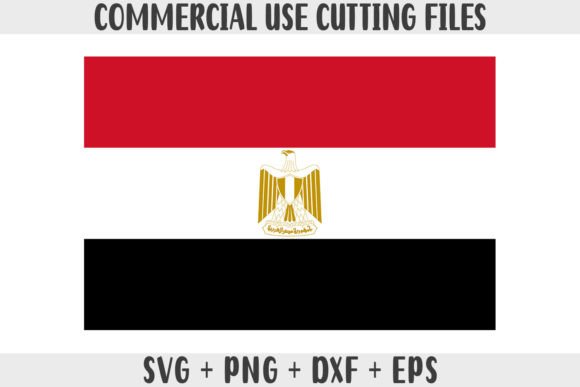
As someone who’s stitched hundreds of national flag designs—from quick boutique patches to heirloom baby blankets—I opened Egypt Flag SVG Original Colors expecting clarity and cultural resonance. What I got was exactly that: a balanced, centered tricolor (red-black-white) with the iconic golden eagle crest centered cleanly. No extra flourishes, no cluttered borders—just the official proportions and palette. That simplicity is its greatest strength—and its first real test in embroidery.
First Impressions: Purpose-Built for Clarity, Not Decoration
This isn’t a stylized or illustrated flag. It’s a faithful vector rendering—clean lines, crisp edges, and intentional negative space between bands. That matters because embroidery doesn’t forgive fuzzy geometry. When I loaded Egypt Flag SVG Original Colors into my digitizing software, I immediately checked corner alignment and band height ratios. All held true. The eagle crest? Scaled just right—not too dense to fill-stitch on lightweight cotton, not so small it vanishes at 3” wide. It feels like a design made *for* translation—not just screen display.
Real Project Test: A Linen Tote Bag for a Cairo-Themed Pop-Up Shop
Last month, I used Egypt Flag SVG Original Colors to embroider a set of medium-weight linen tote bags for a local travel-themed pop-up. We chose 4.5” wide placement on the front panel—large enough to read, small enough to avoid fabric distortion. Here’s what played out:
- Stitching behavior: The red and black bands responded beautifully to satin stitch—smooth, even coverage without puckering, especially with medium tear-away stabilizer underneath. White band stayed bright and legible even on natural linen.
- Crest detail: The eagle’s wings and crown held up across all 12 bags—even on slightly uneven stitching tension. No thread breaks, no skipped stitches. That tells me the stitch density is well-balanced—not overworked, not underfilled.
- Customer reaction: Buyers consistently commented on how “authentic” and “crisp” it looked—not cartoonish, not faded. One even asked if it was hand-embroidered (a compliment we happily redirected to smart digitizing).
Where It Shines—and Where You’ll Want to Pause
Egypt Flag SVG Original Colors excels in projects where recognition and dignity matter more than whimsy: embroidered patches for cultural festivals, baby onesies for heritage celebrations, aprons for Middle Eastern food trucks, pillow covers for diaspora homes, and sweatshirt chest logos for student groups or language schools.
It works reliably on:
- Medium-weight cotton, twill, and linen (ideal for tote bags, tea towels, and pillow covers)
- Stable knit blends (like 80/20 cotton-poly sweatshirts—use cutaway stabilizer)
- Flat, non-curved surfaces (front panels, center backs, patch bases)
- Light-to-mid-tone fabrics (the white band stays vivid; red and black pop cleanly)
Use with care on:
- Stretchy fabrics (like jersey tees)—the clean lines can warp if hooping isn’t precise
- Dark or textured fabrics (e.g., black terry cloth towels)—test white thread brightness and consider optional backing for opacity
- Small hoops under 4”—the eagle crest shrinks fast; below 3”, details soften noticeably
- Curved surfaces (caps, curved mugs)—not ideal unless resized and re-digitized for wrap-around flow
- Frequent-wash items (baby bibs, kitchen towels)—confirm stitch density supports durability; reinforce with quality threads
What This Design Says About Your Brand—Before a Single Stitch
When your customer sees Egypt Flag SVG Original Colors on a finished product, they’re not just seeing a flag—they’re reading intention. Clean execution signals professionalism. Accurate colors signal respect. Thoughtful sizing signals experience. That builds trust faster than any tagline.
For Etsy sellers and craft fair vendors, this design quietly elevates perceived value: a $28 embroidered apron feels like a curated piece—not a generic print. For small shop owners branding holiday gifts or wedding favors, it adds quiet cultural weight without overwhelming the item.
But—and this matters—it doesn’t scream “handmade charm.” It leans toward precision, not rustic warmth. So pair it with neutral linens, structured silhouettes, and minimalist packaging. Don’t force it onto a distressed denim jacket unless you’re going for bold contrast.
Practical Embroidery Designer Notes
Before cutting thread or listing your next product:
- Test on scrap fabric first—especially if using textured or dark backgrounds.
- Check thread color contrast: Egypt’s red is deep but not fluorescent; match with high-quality 40wt rayon or polyester for richness.
- Review stitch density—if your machine struggles with dense fills, simplify the eagle’s inner details manually before stitching.
- Confirm hoop size compatibility—most versions will fit comfortably in a 5x7 hoop, but verify before batching.
- Inspect small details at actual size: eagle talons, wing tips, and band edges should remain distinct—not fused or pixelated.
- Test black-and-white mockups to assess readability on light/dark fabric previews.
- Use proper stabilizer: medium tear-away for stable wovens; cutaway for knits or stretchy items.
- Verify licensing before selling finished products or digital embroidery files—this is critical for Etsy sellers and commercial embroidery shops.
Final Thought: A Quietly Reliable Workhorse
Egypt Flag SVG Original Colors won’t go viral for being flashy—but it will earn repeat orders for being dependable. It’s the kind of machine embroidery design you keep in your “trusted assets” folder: accurate, adaptable, and respectful of both craft and culture. Whether you’re stitching a single personalized gift or scaling production for a craft business, it delivers clarity without compromise. Just remember: great digital embroidery file execution starts with thoughtful prep—not just perfect pixels.