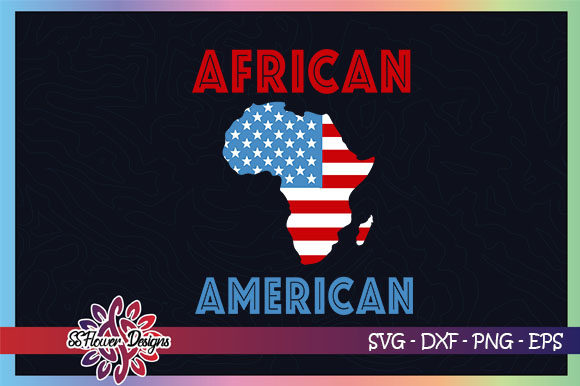
African American Africa Map USA Flag
First Impression: Bold, Symbolic, and Ready for Meaningful Stitching
When I opened African American Africa Map USA Flag for the first time, I didn’t just see a graphic—I saw storytelling potential stitched into fabric. The composition merges three powerful visual anchors: a simplified but recognizable outline of Africa, the continental U.S., and the American flag—arranged thoughtfully, not cluttered. It’s clean enough for embroidery interpretation, yet layered enough to carry weight. As a designer who regularly selects machine embroidery designs for client projects and small-batch production, I immediately asked: *Will this translate well in thread? Will it resonate with buyers on a tote bag or baby onesie? Does it hold up across fabric types and use cases?*
A Real-World Test: Embroidering a Commemorative Tote for a Community Book Drive
Last month, I used African American Africa Map USA Flag on a limited-run canvas tote for a local Black History Month book drive. We chose natural unbleached cotton—medium-weight, slightly textured—and opted for a 4” × 4” hoop placement centered on the front panel. The design scaled cleanly without distortion, and its moderate detail level (no micro-lines or ultra-thin borders) held up beautifully in satin and fill stitch. Customers responded strongly—not just to the imagery, but to how *resolved* it felt once stitched. No pixelation, no jagged edges, no confusing overlaps. That tells me the underlying vector structure (SVG, EPS, DXF) is well-built—not just traced, but intentionally drafted.
Where This Design Shines—and Where It Needs Thoughtful Handling
African American Africa Map USA Flag works especially well for:
- Custom apparel: Sweatshirt embroidery (especially on midweight fleece), structured caps (front panels only), and relaxed-fit tees with light stabilizer;
- Tote bag design and aprons—its balanced proportions read clearly at 3–5 inches wide;
- Embroidered patch applications, where clean outlines and symbolic clarity matter more than photorealism;
- Baby embroidery on onesies or burp cloths—when simplified to one or two thread colors, it reads warmly and respectfully;
- Holiday embroidery and wedding gifts (e.g., personalized kitchen towels or pillow covers for couples celebrating heritage);
- Small shop product branding—think boutique tags, packaging accents, or embroidered shelf talkers.
But be mindful when using it on:
- Stretchy fabric like jersey or rib knits—requires cutaway stabilizer and careful hooping to prevent puckering around map contours;
- Dark fabric—test thread colors early; navy or charcoal backgrounds need high-contrast thread (e.g., bright red/white/blue or gold/cream) to keep the flag elements legible;
- Curved surfaces like baseball caps—avoid placing the full composition across the crown; instead, use a cropped version focused on the Africa + USA fusion;
- Thin fabric like voile or lightweight linen—reduce stitch density if digitizing your own version, or confirm the file isn’t over-stitched in dense fill areas;
- Products meant for frequent washing—reinforce backings and avoid overly delicate satin stitch borders on outer edges.
What It Adds to Your Handmade Product—and What It Requires From You
This isn’t just decoration—it’s narrative embroidery. When customers see African American Africa Map USA Flag on a finished product, they’re reading identity, pride, and connection. That elevates perceived value, especially for Etsy sellers and creative entrepreneurs building intentional brands. But that emotional resonance depends on execution: a poorly stabilized sweatshirt embroidery will undermine even the strongest design. So before listing it as a digital embroidery file or stitching it into 50 tote bags, ask yourself:
- Have I tested it on scrap fabric matching my final substrate?
- Does the thread color contrast work on both light and dark mockups?
- Is the stitch density appropriate—or does it need lightening for breathable fabrics?
- Does it fit comfortably within my standard hoop size without scaling down so far that details blur?
- Have I inspected corners and intersections (like where the flag stripes meet the map edge) for potential thread nesting?
- Have I confirmed licensing terms—especially if selling finished items or bundling it as part of a craft business toolkit?
Design Assets That Earn Their Place in Your Workflow
As someone who curates embroidery files for real projects—not just inspiration boards—I appreciate that African American Africa Map USA Flag lands in that rare sweet spot: symbolic without being cliché, scalable without losing meaning, and versatile without feeling generic. It fits naturally alongside other meaningful graphics in a designer’s library—whether you're creating personalized gifts, launching a capsule collection, or developing printable mockups for client pitches. Its strength lies in restraint: no excessive ornamentation, no competing visual noise. Just clear, confident design language that invites thoughtful stitching.
If you're an Etsy seller or small shop owner, this is the kind of embroidery file that supports brand consistency—especially when paired with complementary motifs (like kente-inspired borders or subtle Adinkra symbols). And for hobbyists and makers, it’s a respectful, ready-to-use anchor for projects that matter.
Just remember: great design assets don’t replace craftsmanship—they elevate it. So give African American Africa Map USA Flag the care it deserves: test, refine, stabilize, and stitch with intention.